
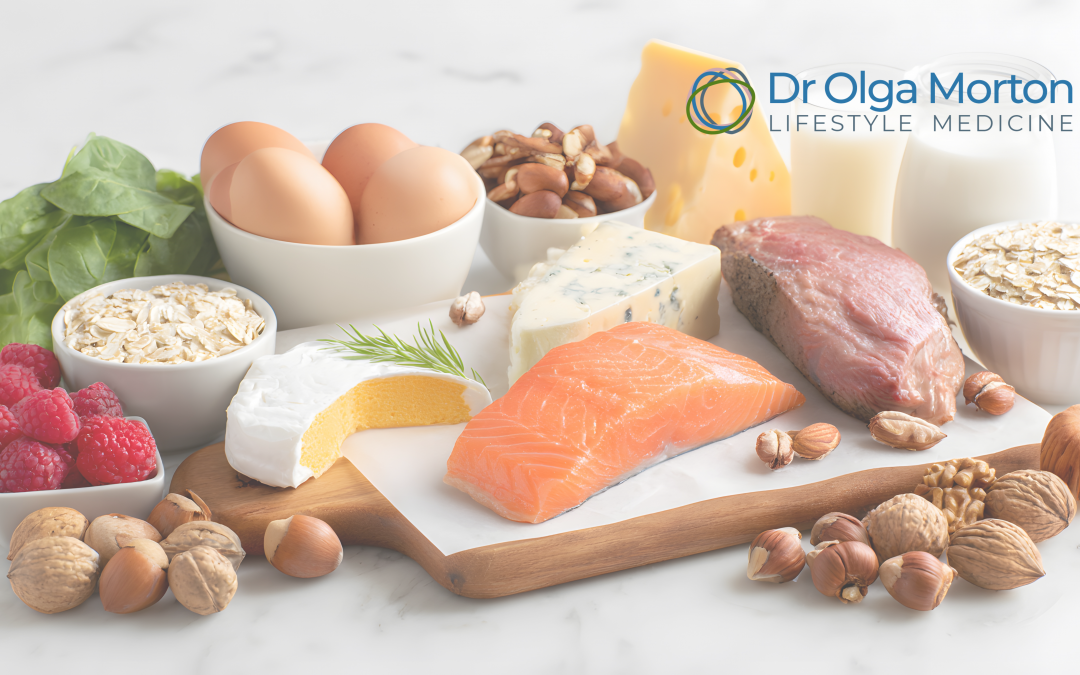
So, let’s talk protein!
If you’re training, trying to get stronger, leaner, or just feel better in your body, you might need more protein than you think.
One of the most common pitfalls?
Not eating enough protein, particularly for women who are active, lifting, and aiming to feel strong as they approach perimenopause and beyond.
So, how much protein do you actually need?
A helpful starting point:
👉 0.8 to 1 gram of protein per pound of ideal body weight
Not your current weight, but your goal or healthy ideal weight.
(Not sure what yours is? You can calculate your ideal body weight here.)
For example:
If your ideal body weight is around 60 kg (roughly 132 pounds), your daily protein needs might range between 105 and 130 grams, depending on your activity level and goals.
If that sounds like a lot, you are not alone. But your body (and hormones) will thank you for making the effort.
Where should you get your protein?
Food first. Always.
Your body absorbs it better, and you get extra nutrients too.
For omnivores:
Chicken breast (100g cooked = ~30g protein)
Salmon (100g cooked = ~25g protein)
Eggs (1 large = ~6g protein)
Greek yogurt (¾ cup or ~170g = ~17g protein)
Cottage cheese (½ cup = ~14g protein)
Ground beef, lean (100g cooked = ~26g protein)
Turkey breast (100g cooked = ~29g protein)
For plant-based ladies:
Lentils (1 cup cooked = ~18g protein)
Chickpeas (1 cup cooked = ~15g protein)
Black beans (1 cup cooked = ~15g protein)
Tofu (½ block or ~150g = ~20g protein)
Tempeh (100g = ~19g protein)
Edamame (1 cup cooked = ~17g protein)
Quinoa (1 cup cooked = ~8g protein)
Hemp seeds (3 tablespoons = ~10g protein)
Chia seeds (2 tablespoons = ~5g protein)
What about protein shakes?
They can help you hit your target, but they should not be your main source.
And please, read the labels. Some protein powders (especially cheaper ones) are full of stuff you do not want in your body – pesticide residues, antibiotics, heavy metals, or artificial additives.
If you do supplement, there are 2 options:
✔️ whey protein (comes from dairy by-products) – choose organic
✔️ pea protein – choose pea-protein isolate
If you can, look for third-party tested brands and avoid cheapest options. Quality matters here.
Quick tip to make it doable?
Spread your protein across your day — aim for around 25 to 30g at each meal, and 10 to 15g in snacks.
If you are not there yet, start by adding 10 to 15g more a day and build from there. Small steps add up.
Bottom line? Protein is not just for bodybuilders.
It is for strong bones, stable energy, healthy hormones, and a metabolism that works with you, not against you.
What are your favourite protein sources?