
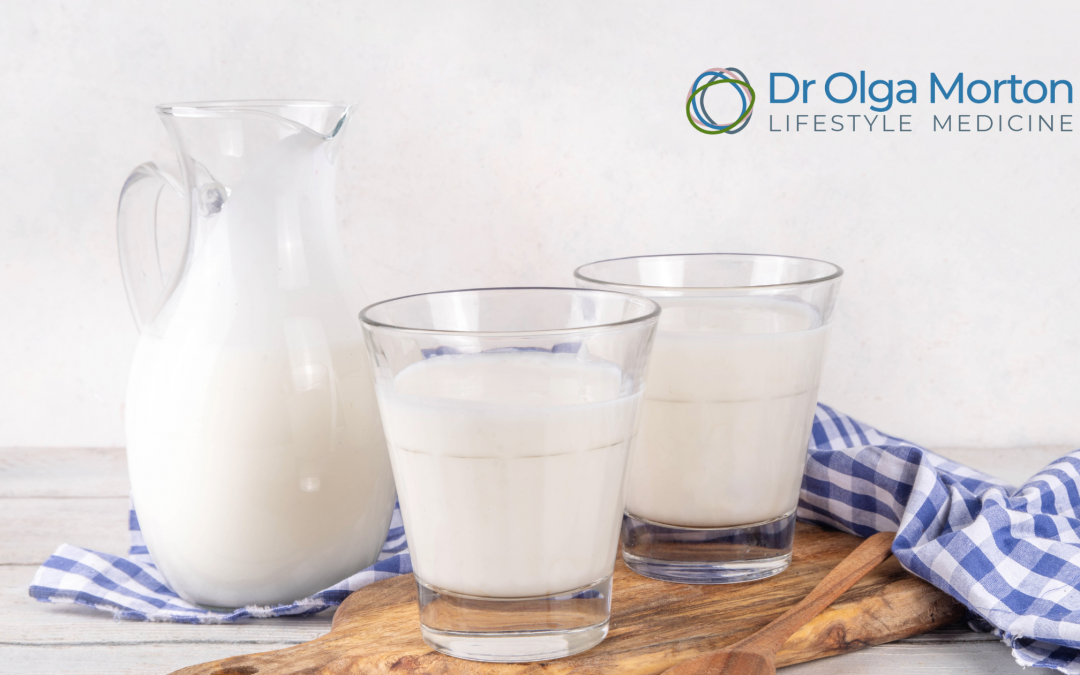
If you’ve ever felt bloated, congested, or just “off” after having a glass of milk or your usual latte, you’re not alone, especially in midlife.
As hormones shift during perimenopause and menopause, our bodies become more sensitive to the foods we eat. Dairy is one of those foods that can either support your health or cause more inflammation than it’s worth.
So let’s break down what’s really going on with dairy, and how to make the best choices for your body.
Cow’s Dairy: What’s the Deal?
Dairy is a traditional source of calcium, protein, and essential vitamins – but not all milk is created equal.
The Two Main Issues with Conventional Dairy:
Lactose Intolerance
As we age, many of us produce less lactase, the enzyme that digests lactose (milk sugar). The result? Bloating, gas, and discomfort.
The Protein Type: A1 vs. A2 Casein
Milk contains proteins called casein, specifically A1 and A2 beta-casein.
Most factory-farmed (especially Northern hemisphere) cows produce A1 milk. This form of casein has been linked to increased inflammation and digestive issues in sensitive individuals.
A2 milk, on the other hand, is more common in Southern Europe and comes from certain breeds like Jersey, goats, and sheep. It’s easier to digest and less likely to cause that post-dairy discomfort.
Ever wondered why not so bloated in Italy or France?
The Factory-Farming Problem
Much of the conventional milk on supermarket shelves comes from cows raised in confined, high-stress environments and fed GMO grains or soy, not grass. This leads to:
Poorer quality milk with lower omega-3s and higher inflammatory omega-6s
Potential residues of antibiotics and growth hormones
A higher likelihood of digestive and skin issues, especially in women with hormone fluctuations
So What Are the Better Options?
💡 Here’s the dairy hierarchy for most women in midlife:
Organic, pasture-raised A2 milk (from Jersey cows)
Goat’s milk – Naturally A2 and easier to digest
Sheep’s milk – Richer, nutrient-dense, and usually well-tolerated
Grass-fed dairy products – Butter, yogurt, and cheese from grass-fed sources are often more digestible and nutrient-rich
What About Plant-Based Milks?
If you’re avoiding lactose or dairy proteins altogether, plant-based milks like almond, oat, soy, coconut, and cashew can be helpful.
They’re naturally lactose-free and casein-free, which is a win if you’re highly sensitive.
But here’s the catch:
Many are low in protein, especially compared to cow’s milk
Some are packed with added sugars, gums, or preservatives
Not all are fortified with calcium, vitamin D, or B12 – important nutrients in menopause
📝 Basic plant-milk rules:
Choose unsweetened varieties
Check the ingredient list – aim for clean, minimal ingredients
Go for fortified options with calcium and vitamin D
For protein, soy milk is the closest match to cow’s milk
Bottom Line: Listen to Your Body
Some women thrive on small amounts of high-quality dairy, especially fermented options like yogurt or kefir. Others feel better without it altogether. Your body is your best guide.
If you’re dealing with digestive issues, skin flare-ups, or joint pain, try removing conventional dairy for a few weeks and reintroduce only the cleanest sources—you may notice a huge difference.
To try this week:
✔ Swap your regular milk for an A2 milk or unsweetened plant-based milk
✔ Read the labels – know what’s in your plant-based milk
✔ If you eat dairy, look for organic, grass-fed, or goat/sheep options
What is your favourite milk in your latte ☕?